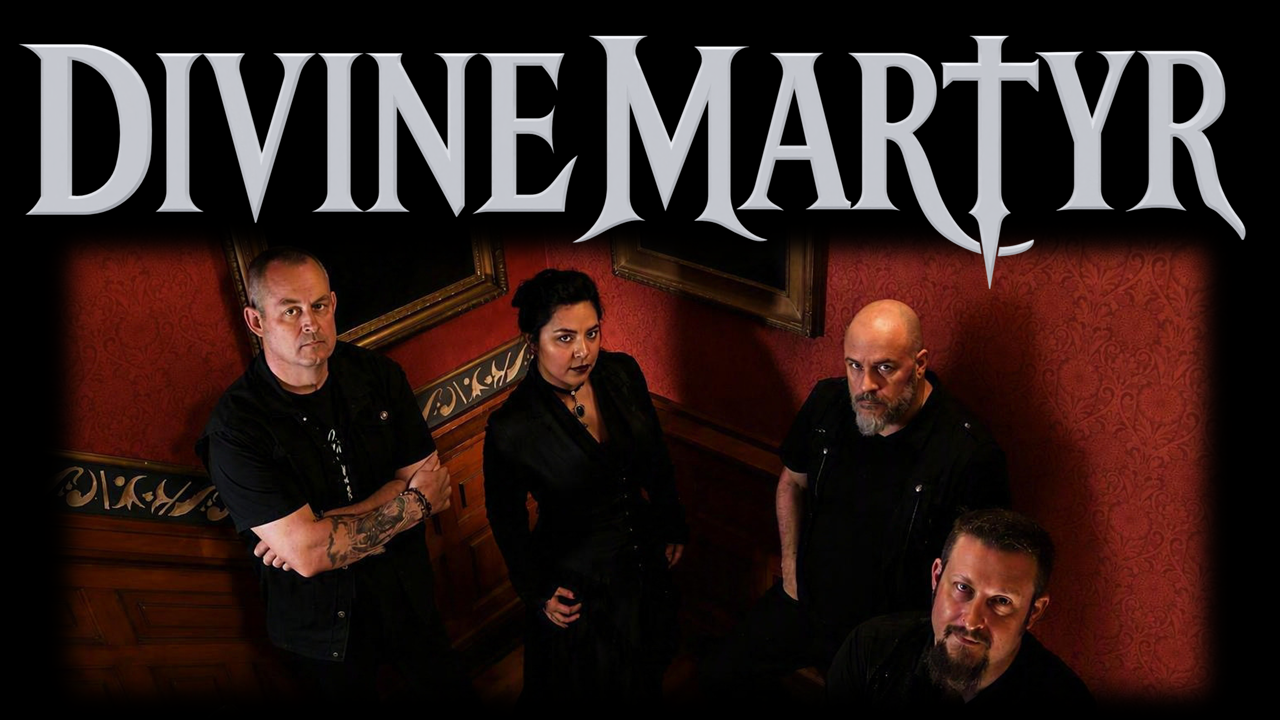
At Divine Martyr, our writing process begins with the raw energy of a metal riff, but it evolves into a masterclass in 300-level Orchestration. We don't just use synth pads; we compose living, breathing scores.
The Composition Phase: Notation First:
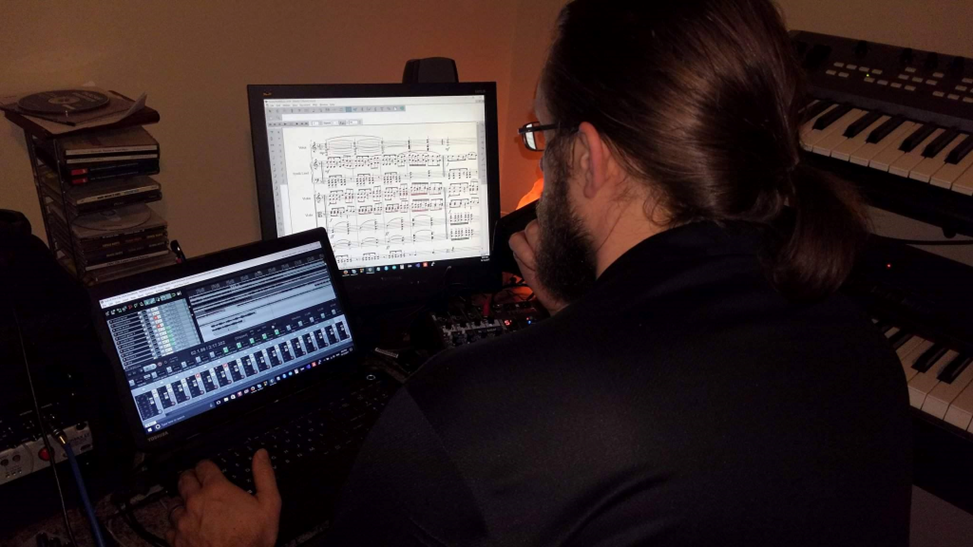
The journey begins with notation software like Finale or Dorico. Following standard orchestral conventions, Mark divides sections (e.g., Cello 1 & 2, Viola 1 & 2) to establish harmonic depth. Every lead is a calculated decision: Should this be a legato ‘arco’ cello lead, or do the 1st French Horns carry the melody?
Advanced Theory: Psychoacoustics & Neural Resonance:
Once the lead is outlined, we begin layering based on Frisson studies and stylistic mirroring. This is where we implement advanced theories from Psychoacoustics, specifically Neural Resonance Theory and Isochronic Theory. We aren't just writing music; we are engineering an immersive sonic experience designed to resonate on a neurological level.
The "Synthenstration" & Band Collaboration:
The initial pass is bounced as an 8–10 track "synthenstration". This serves as the foundation for the rest of the band to write their guitars, bass, drums, and vocals. This collaborative layer ensures the metal and the symphony are never fighting—they are a unified wall of sound.
The Final Score: 100+ Orchestral Stems:
In the final production phase, the orchestration expands to VST-based sound libraries. Utilizing modern high-end libraries, we track 5–10 stems per instrument to capture every articulation:
- Legato and Spiccato
- Pizzicato and Sul Ponticello
- Col Legno and more.
Mark adds the human element by layering real-time keyboard expressions, manual tremolos, and expression wheel recordings over the sampled libraries. The result is a hybrid of Hollywood-grade production and authentic performance.
Between strings, woodwinds, brass, choirs, and percussion, a single Divine Martyr song often features 40 to over 100 orchestral stems before heading to the mixing engineer.
Quick overview:
Neural Resonance Theory – The theory that the brain and body synchronize with external environmental rhythms—such as music—rather than just processing them mentally. We use this to illustrate lyrical themes as a form of “neurological
word painting.”
For fans of:
If you are looking for a Christian alternative to Nightwish, Epica, Xandria, or Kamelot, Divine Martyr is heavily influenced by their writing style. We combine symphonic metal with cinematic power metal, drawing from influences like Symphony X, Dream Theater, and Blind Guardian, as well as legendary composers like Hans Zimmer, Howard Shore, Wagner, and Penderecki.